
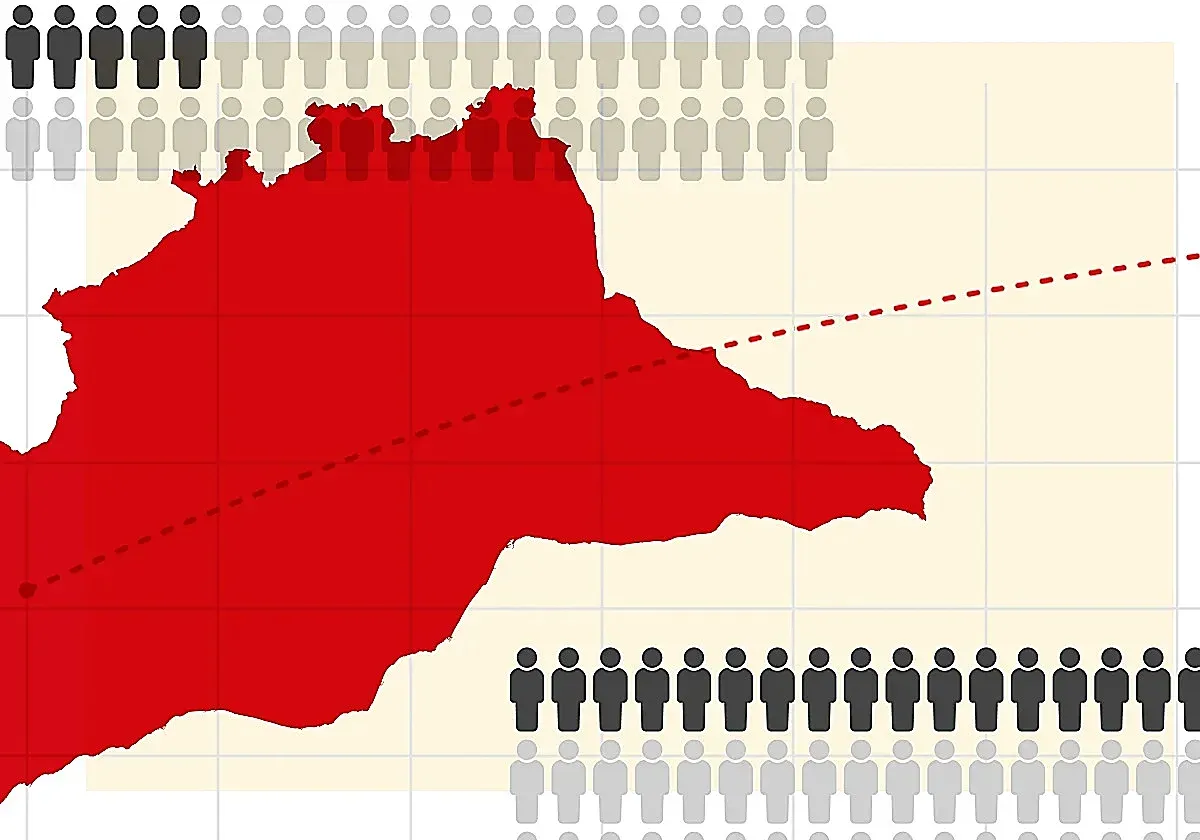
Málaga Province's Population Has Been Growing at Twice the National Rate
Málaga province is undergoing one of the most significant demographic transformations in Spain.
Since the beginning of the century, the population of Málaga has grown by 43.53%, almost twice the national Spanish growth rate of 22.77%.
In absolute terms, Málaga has added more than 550,000 residents since 2000. By April 2026, the province had reached approximately 1.81 million inhabitants, according to the latest population data from Spain's National Statistics Institute (INE).
And the growth has continued.
By July 2026, Málaga province had reached a new population record of more than 1.82 million people, with almost 7,900 additional residents recorded during the first half of the year.
These numbers tell a much bigger story than simply saying that Málaga is becoming more popular.
They point to a profound change in the economic, social and property landscape of the Costa del Sol.
Málaga's Population Growth Compared With Spain
The contrast between Málaga and Spain as a whole is striking.
Since 2000:
LocationPopulation Growth Since 2000
Málaga province
43.53%
Spain
22.77%
Seville province
Around 17%
Málaga has therefore grown at almost twice the national rate over the period.
Spain's population increased from approximately 40.47 million people in 2000 to around 49.7 million in 2026.
Málaga, meanwhile, added approximately 550,000 residents during the same period.
The province has also accounted for roughly one in every three new residents added to Andalusia since 2000.
That makes Málaga one of the most important population-growth centres in southern Spain.
Málaga Has Reached a New Population Record
The growth has not stopped at the 1.8 million milestone.
According to the latest INE figures reported in August 2026, Málaga province has surpassed 1.82 million inhabitants, setting another historic population record.
Málaga city itself has also continued to grow, reaching more than 603,000 residents.
One of the most important characteristics of this growth is the international nature of the population.
Around 461,000 residents of Málaga province were born outside Spain, representing approximately 25% of the provincial population.
This international dimension has been a defining feature of the Costa del Sol for decades, but its importance continues to increase.
Why Is Málaga Growing So Quickly?
There is no single explanation for Málaga's population boom.
Instead, several powerful trends are working together.
1. International Migration
International migration is one of the biggest contributors to population growth in Málaga.
The Costa del Sol has long attracted residents from across Europe and increasingly from Latin America and other parts of the world.
Recent population data show Colombia, Morocco and the United Kingdom among the significant sources of new residents.
People move to Málaga for many different reasons.
Some are retirees looking for a warmer climate and a Mediterranean lifestyle.
Others are entrepreneurs, professionals, remote workers, investors, students or families looking for a permanent home.
This diversity makes Málaga much more than a traditional holiday destination.
It is increasingly becoming a place where people live, work, invest and build businesses.
2. Málaga's International Appeal
The Costa del Sol has something that is difficult for many competing European destinations to replicate.
It combines:
- A Mediterranean climate
- More than 300 days of sunshine often associated with the region
- Beaches
- International schools
- An international airport
- Excellent transport connections
- Healthcare facilities
- Restaurants and cultural attractions
- Golf resorts
- A large established international community
- A growing technology and business ecosystem
For international buyers considering a move to Spain, these factors can make Málaga particularly attractive.
The province offers both the lifestyle associated with the Mediterranean and increasingly sophisticated urban and business infrastructure.
3. Málaga Has Become a Business and Technology Hub
Málaga's transformation is not purely residential.
Over the past decade, the city has developed a growing reputation as a technology and innovation centre.
The presence of international companies, technology businesses, startups and professional services has helped diversify the local economy.
This matters for population growth.
A destination that attracts retirees can experience population growth.
But a destination that attracts workers, entrepreneurs, students, investors and families can create a much broader and more sustainable demographic base.
Málaga increasingly falls into the second category.
4. Remote Work Has Changed the Costa del Sol
The rise of remote and hybrid working has also changed the relationship between employment and location.
A professional may no longer need to live close to a company's headquarters.
Instead, they can potentially work for a company based in Madrid, London, Berlin, Amsterdam or another international city while living in Málaga.
This has increased the appeal of the Costa del Sol for internationally mobile professionals.
The result is an increasingly diverse population made up of Spanish residents and people from many different countries.
Málaga's Population Growth Is Important for the Property Market
For anyone interested in Costa del Sol property, the demographic figures are particularly important.
Population growth creates additional demand for housing.
More residents require:
- Homes
- Apartments
- Rental properties
- Schools
- Shops
- Restaurants
- Offices
- Healthcare
- Transport
- Leisure facilities
This does not automatically mean property prices will always rise.
Supply, interest rates, planning restrictions, construction costs and economic conditions all matter.
However, sustained population growth provides an important underlying source of housing demand.
What Does Population Growth Mean for Costa del Sol Property?
The relationship between population and property is relatively straightforward.
If more people want to live in an area, the demand for housing tends to increase.
But Málaga's situation is more complex because it has several different sources of demand.
There is demand from:
Spanish Buyers
People relocating from other parts of Spain continue to be attracted to Málaga for employment, lifestyle and quality-of-life reasons.
International Residents
Foreign residents looking for permanent homes contribute to demand across the province.
Second-Home Buyers
The Costa del Sol remains one of Europe's best-known second-home destinations.
Investors
Investors are attracted by the region's tourism sector, rental market and long-term international appeal.
Retirees
Málaga remains highly attractive to retirees seeking a Mediterranean lifestyle.
Together, these groups create a broad and diverse property market.
Málaga Is Closing the Gap With Seville
Málaga's population growth becomes even more striking when compared with Seville.
In 2000, Seville province had approximately 445,000 more residents than Málaga.
By 2026, that gap had fallen to around 187,000.
Málaga has not yet overtaken Seville in population.
But the gap is narrowing rapidly.
According to population projections cited from the INE, Málaga province is expected to exceed two million residents by 2035 and could overtake Seville in population by 2037.
If those projections materialise, it would represent a remarkable demographic shift within Andalusia.
Which Areas of Málaga Province Are Benefiting From Population Growth?
Population growth is not restricted to Málaga city.
The wider province includes a network of highly attractive coastal and inland destinations.
These include:
- Marbella
- Estepona
- Fuengirola
- Benalmádena
- Mijas
- Torremolinos
- Nerja
- Rincón de la Victoria
- Vélez-Málaga
- Benahavís
- Casares
- Manilva
- Málaga city
Each location has a different property market.
Some areas are particularly popular with international retirees.
Others attract families, professionals, tourists or investors.
This means that population growth should not be interpreted as a single provincial property trend.
The micro-location remains crucial.
Málaga's Population Growth Is Already Affecting Housing
One consequence of rapid population growth is pressure on the housing market.
Málaga has experienced significant increases in residential property prices over recent years.
According to INE data reported in May 2026, housing prices in Málaga city increased by 32.7% between 2015 and 2024, making it the second Spanish provincial capital for house-price growth over that period, behind Valencia.
Population growth is not the only reason for rising prices.
Tourism, investment, construction costs, limited supply and strong international demand also play important roles.
Nevertheless, the demographic trend provides an important part of the explanation for why housing demand remains strong.
Population Growth Creates Opportunities — But Also Challenges
Rapid growth is generally positive for an economy, but it brings challenges.
Málaga needs to ensure that infrastructure keeps pace with the number of people moving into the province.
That includes:
- Housing
- Roads
- Public transport
- Water supply
- Schools
- Healthcare
- Electricity
- Waste management
- Public services
The challenge becomes particularly important in areas where population growth is significantly faster than the construction of new homes and infrastructure.
A growing population can support economic development, but only if the necessary infrastructure is available.
The Importance of New Housing Supply
One of the biggest questions for Málaga's future is whether enough homes can be built to accommodate its growing population.
If population growth continues at its current pace while housing supply remains constrained, affordability could become increasingly difficult for local residents.
This creates an interesting tension within the property market.
For property owners, strong demand can be positive.
For first-time buyers and renters, however, rapid price growth can create significant affordability challenges.
The long-term health of the Málaga property market will therefore depend partly on finding the right balance between population growth, new housing supply and affordability.
Why International Buyers Continue to Watch Málaga
Málaga's demographic story is one reason international property buyers continue to pay close attention to the province.
A property market supported by a growing population can have advantages over a market dependent almost entirely on short-term tourism.
Someone buying a property in an area with a growing permanent population may potentially benefit from demand from:
- Long-term residents
- International families
- Professionals
- Retirees
- Students
- Local businesses
- Holidaymakers
That diversity can make the market more resilient.
Of course, property remains a long-term investment and there are no guarantees.
But population growth is an important fundamental indicator for anyone assessing a location.
What Could Málaga Look Like in 2035?
If current demographic projections are broadly correct, Málaga could pass the two-million-resident mark by 2035.
That would mean another major increase from today's population of more than 1.82 million.
Such growth would likely transform the province further.
Málaga could see:
- More residential development
- Greater demand for rental housing
- Expanded transport infrastructure
- More international businesses
- Increased demand for schools
- More healthcare facilities
- Further urban development
- Greater investment in infrastructure
- Continued internationalisation
The question is not whether Málaga will change.
It is how the province manages that change.
Why Málaga's Population Growth Matters to Property Sellers
If you already own property on the Costa del Sol, population growth is an important part of the bigger market picture.
More residents do not automatically mean that every property will increase in value.
But a growing population can contribute to sustained underlying housing demand.
For sellers, this means understanding not just the value of the property itself, but also the wider market dynamics.
Factors such as:
- Location
- Property type
- Condition
- Accessibility
- Community facilities
- Views
- Outdoor space
- Proximity to transport
- Local housing supply
- Buyer demographics
can all influence how attractive a property is to today's buyers.
A strong demographic trend can support demand, but property-specific factors remain critical.
What Málaga's Population Boom Means for the Future of the Costa del Sol
Málaga's transformation is bigger than a population statistic.
The province has evolved from a traditional Mediterranean tourism destination into an increasingly international place to live, work, invest and do business.
Since 2000, its population has grown by more than 43%, compared with less than 23% for Spain as a whole.
In 2026, the province has passed 1.82 million inhabitants.
And if current projections are realised, Málaga could pass two million residents within the next decade.
That demographic momentum could have profound consequences for the Costa del Sol property market, local businesses, infrastructure and the wider Andalusian economy.
Final Thoughts: Málaga Is Becoming One of Spain's Fastest-Growing Population Centres
The numbers are difficult to ignore.
Málaga province has grown at almost twice the rate of Spain since the beginning of the century.
More than half a million additional people have made the province their home since 2000, and the population has now passed 1.82 million.
Much of that growth has been driven by international migration, employment opportunities, lifestyle factors and Málaga's increasing position as a business and technology centre.
For the property market, the implications are significant.
A growing population creates ongoing demand for homes, rentals, services and infrastructure. At the same time, it creates challenges around affordability, development and ensuring that infrastructure keeps pace with demand.
For anyone considering buying, selling or investing in Costa del Sol property, Málaga's demographic growth is therefore a trend worth watching closely.
The Costa del Sol is no longer simply a place where people come for a holiday.
Increasingly, people are coming to Málaga to stay.